What does faith in God have to do with seeing clearly? More than you think
When we talk about seeing clearly, we usually think about our eyes.
As an optometrist, I spend much of my professional life helping people see more clearly. We examine the eyes, identify problems that may be affecting vision, and recommend the best solution.
But over the years, I have come to appreciate that seeing clearly is about more than eyesight. You can have healthy eyes and still struggle to see your life clearly.
- How do you see yourself?
- How do you see your purpose?
- How do you see your circumstances?
- How do you see the direction your life is heading?
These are also questions of vision. And this is where I believe faith in God can help us see life more clearly than we often realise.
The world can blur your vision
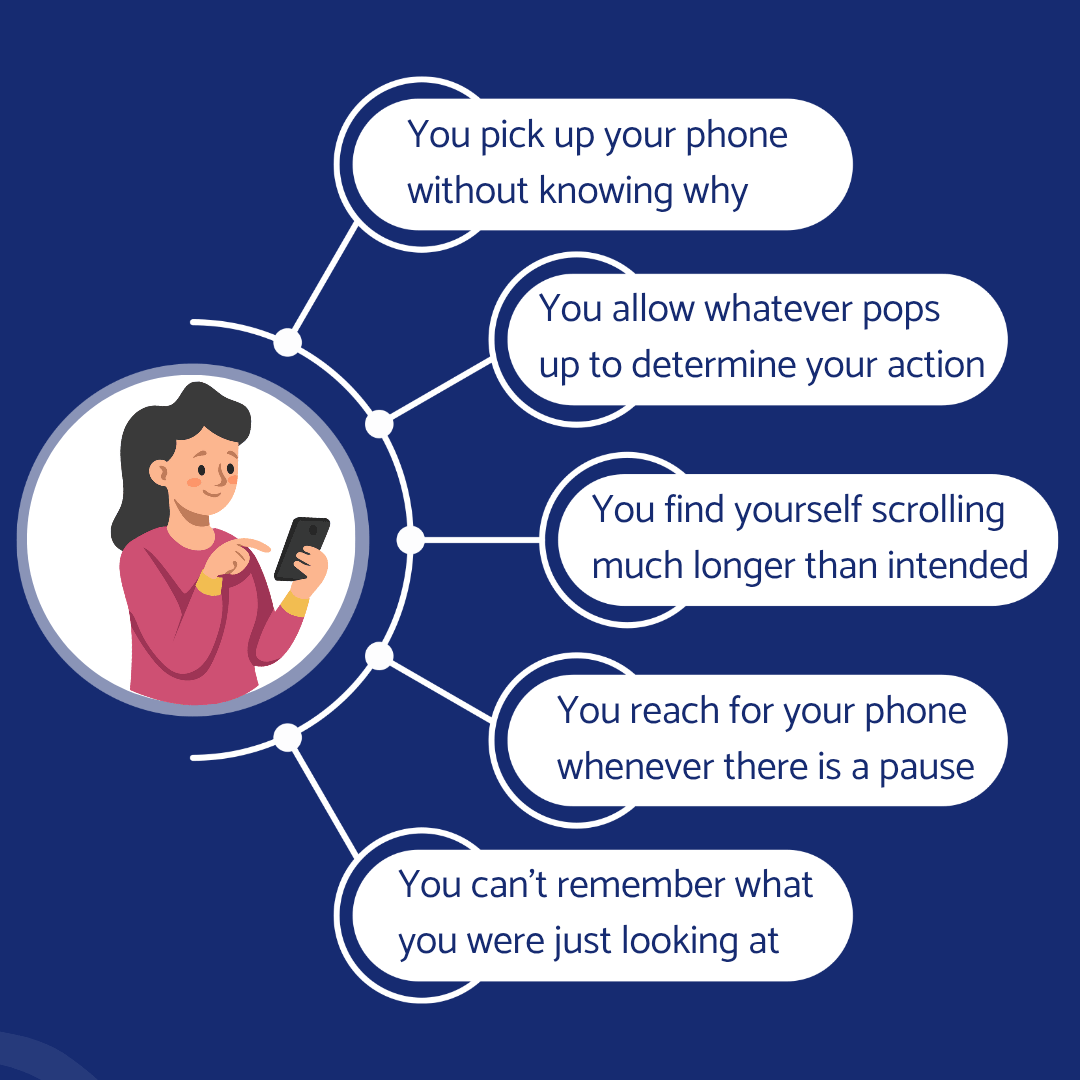
We live in a world filled with things competing for our attention.
- Constant noise.
- Social media.
- Comparison.
- Other people’s opinions.
- Pressure to keep up.
Every day, we are exposed to images and messages telling us what success should look like, what we should have achieved by now, how we should look, what we should own, where we should be going, and even how we should feel about ourselves.
The more we consume, the more easily these messages can become part of the way we see ourselves and our lives.
- You may begin to look at someone else’s success and conclude that you are falling behind.
- You may experience a setback and conclude that you have failed.
- You may look at your current circumstances and assume that they define your future.
- You may have many opportunities in front of you but become so distracted by what everyone else is doing that you lose sight of what actually matters to you.
This is why the lens through which we view life matters.
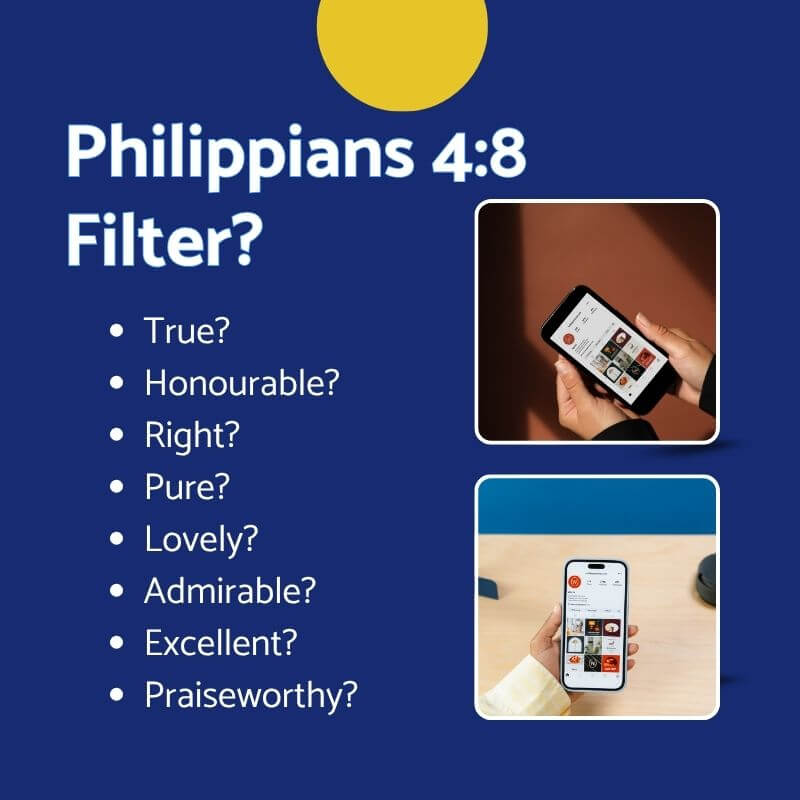
Faith in God can become your filter
Faith is not meant to be something we practice only on Sundays or turn to when we have a problem.
As A.W. Tozer points out in his book, The Pursuit of God, one of the problems we can have is the tendency to divide our lives into sacred and secular. We can adopt a sacred posture towards spiritual things and a secular posture towards natural things, and end up living divided lives instead of living with an integrated faith.
Applying our faith in how we live every day can make a whole difference.
When your values are rooted in God, those values can become a filter through which you process what you see, hear, experience and pursue. That does not mean ignoring reality. It means learning to interpret reality through what you believe about God and His word.
- Instead of allowing the secular world to determine how you live, you have faith-driven values by which you live.
- Instead of allowing every message you encounter to determine how you think, you have a standard against which you can evaluate those messages.
- Instead of automatically following the crowd, you can ask whether something aligns with your values.
- Instead of allowing circumstances to tell you who you are, you can allow God to shape your understanding of yourself.
- Instead of constantly asking, “What is everyone else doing?”, you can begin asking, “What does God want me to do?”
That is where faith can bring clarity.
Faith in God can change how you see yourself
One of the first places this matters is in how you see yourself. It is easy to build our self-image around what we see around us. We compare our appearance, achievements, relationships, careers, finances and lifestyles with those of other people. But comparison gives us an incomplete picture. Faith gives us another reference point. Scripture reminds us that we are:
- Created in God’s image (Genesis 1:27)
- Wonderfully made (Psalm 139:14)
- Loved by God (Romans 5:8)
- Called to live purposefully (John 15:16; 1 Peter 2:9).
These truths do not mean that we never need to grow or change. They mean that our value does not have to be determined by comparison.
- You can recognize areas where you need to improve without concluding that you are inadequate.
- You can admire someone else’s achievements without deciding that their life is the standard you must meet.
- You can acknowledge your weaknesses without allowing them to become your identity.
Applied faith changes the lens through which you see yourself.
Faith in God can bring clarity to your purpose
Faith also affects how we see our purpose. Purpose is sometimes presented as though everyone needs to discover one huge, extraordinary assignment. But purpose can also be expressed in the ordinary things we do every day. Jesus said, “But seek first his kingdom and his righteousness” (Matthew 6:33). That gives us a different way of thinking about priorities. Instead of allowing everything competing for our attention to become equally important, we learn to put what matters most first.
Then, there is the question of our gifts. Peter writes that we should use whatever gift we have received to serve others (1 Peter 4:10). Your abilities are not simply for personal achievement. They can become tools through which you contribute, serve and make a difference. This changes the way you see your work, your skills and your opportunities. It also changes the way you compare yourself with others.
Paul tells us in Galatians 6:4 to examine our own actions rather than measuring ourselves against someone else. That is important because comparison can make someone else’s assignment look like yours. You may start pursuing a path simply because it looks successful for someone else. But clarity requires you to recognise that you do not have to live someone else’s life to live purposefully.
And then there is one of my favourite practical applications of faith: “Whatever you do, work at it with all your heart, as working for the Lord, not for human masters.” (Colossians 3:23). Think about how this changes the way you approach ordinary life.
- Your work.
- Your business.
- Your studies.
- Your responsibilities.
- Your service to others.
Things that may seem ordinary can be approached differently when you see them as opportunities to honour God.
Faith does not necessarily require you to change what you are doing before you can begin living purposefully. Sometimes it changes how you see and approach what is already in front of you.
Faith in God can change how you see your circumstances
What happens when circumstances are not what you expected? This is often where our vision is tested most. It is easy to have clarity when everything is going well. But disappointment, uncertainty, delay and difficulty can cloud our perspective.
- An imperfect situation can make us believe that everything is going wrong.
- A closed door can make us assume there are no other possibilities.
- A difficult season can make us forget what we already know about God’s faithfulness.
Faith does not require us to pretend that difficult circumstances are easy. Rather, it gives us another way to look at them.
- You can acknowledge that something is difficult without concluding that it is hopeless.
- You can recognise that you do not have all the answers without assuming that there is no direction.
- You can experience uncertainty while still choosing to trust God.
This is why faith can act as a filter. It helps you identify the clouds and distractions that may be affecting how you interpret what you are experiencing.
You don’t always need perfect circumstances to see clearly
Sometimes we think we will finally have clarity when everything around us is settled. When the finances improve. When the right opportunity comes. When the difficult relationship is resolved. When the business grows. When we know exactly what the future holds. But life rarely gives us perfect conditions.
If our ability to see clearly depends entirely on our circumstances, our vision will constantly change with those circumstances. This is why I believe that what we need are healthy eyes and a heart full of faith.
Healthy eyes matter. We need to care for our physical vision so we can continue to pick up visual information around us. But seeing clearly involves more than our eyes. We also need to pay attention to the other aspect which happens in our hearts, that is, our inner self, including our mind, emotions, will and conscience.
What are you allowing to shape your heart? If it is faith, your faith-driven values serve as a filter that keeps you focused when imperfect situations present themselves.
An indication you need to change your lens
If life seems blurry or you are having difficulty focusing, maybe the first question shouldn’t be, “How do I change my circumstances?” It should be, “What lens am I using to look at them?”
Are you looking through comparison, fear, other people’s expectations, past disappointments or through what you see on social media? If so, then it may be time to change the lens from which you are viewing life. It may be time to allow your faith, its principles and its values, to begin to shape the way you interpret what you see
Changing the lens does not necessarily change the situation immediately. But it can change what you notice. It can help you identify distractions. It can help you see yourself more accurately. It can help you recognise what matters. It can help you approach your everyday responsibilities with greater purpose. And when you do these things, you can begin to take steps that may change the situation or help you come out of it better and stronger.
Conclusion
In a visually saturated and distracting world, we need more than healthy eyes. We need to become intentional about what we look at, what we focus on, what we allow to influence us and how we interpret what we see.
Faith is part of that clarity.
When you apply your faith to everyday life, it becomes a filter that helps you see yourself, your purpose, your circumstances and the direction of your life more clearly
You may not have perfect circumstances. You may not have all the answers. You may not be able to see the entire road ahead. But you can choose the lens through which you look.
Use the gift of sight wisely
Look through the lens of faith
See clearly and live purposefully.